Dublin for First Timers: What to Actually Do (Beyond the Cliches)
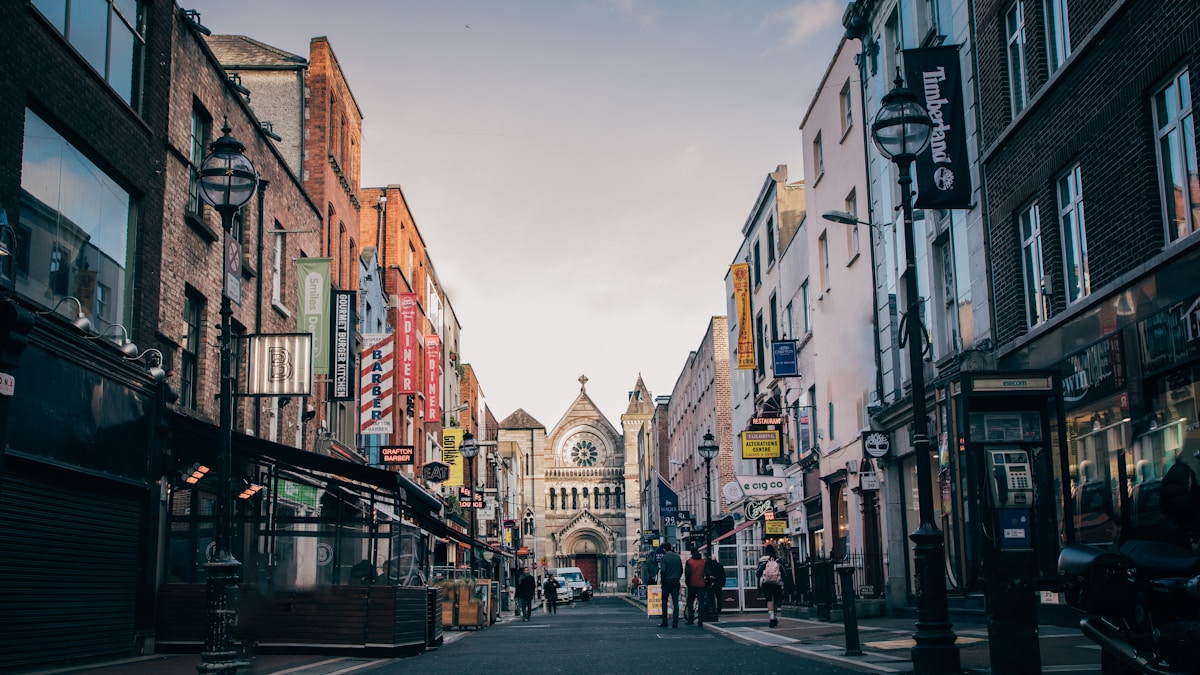
So you’re coming to Dublin. You’ve probably already been told to visit the Guinness Storehouse, walk through Temple Bar, and take a photo with the Molly Malone statue. You’ve maybe read a listicle or two that suggested you “experience the craic” as if it’s something you can order at a counter. And you’ve almost certainly seen those Instagram photos of colourful pub fronts that make Dublin look like a theme park for stag parties.
Here’s the thing: Dublin is genuinely one of the best cities in Europe. But the version of it that gets sold to first-time visitors is a watered-down, overpriced imitation of the real thing. The tourist trail will show you a Dublin that locals barely recognise. It’ll cost you twice what it should, and you’ll leave thinking it was grand but not much more.
This guide is different. It’s what you’d hear if you asked a Dubliner friend what to actually do with your time. Where to eat without getting ripped off. Which pubs are worth sitting in and which are glorified gift shops. What to see that’ll genuinely stick with you. We’ve laid it out as a three-day itinerary, but treat it loosely. Dublin rewards people who wander.
If you’re visiting on a weekend, check our things to do in Dublin this weekend guide for what’s on right now. Plans change weekly, and there’s always something worth catching.
What to Skip (and Why)
Let’s get this out of the way early. These aren’t bad places. They’re just not worth prioritising when you’ve got limited time and Dublin has so much better to offer.
The tourist pubs in Temple Bar. Temple Bar is a real neighbourhood with some genuinely good spots, but the pubs lining the main strip charge eight or nine euro a pint and exist primarily to separate tourists from their money. The “live music” is often a lad with a guitar playing Galway Girl on repeat. You’ll know you’re in the wrong pub when there’s a laminated menu of cocktails named after Irish stereotypes.
The Guinness Storehouse queue. Look, if you really love Guinness and you want the rooftop pint with the view, go for it. But you’ll spend the best part of twenty-five euro and an hour in a queue for what is essentially a very well-designed corporate museum. The pint at the end is the same pint you can get in any decent pub for a fiver. If you’re short on time, skip it. If you do go, book online and go first thing in the morning.
The Book of Kells at Trinity. Again, not bad. It’s a remarkable manuscript. But you’ll pay to get in, you’ll shuffle through a dark room in a queue of people holding phones above their heads, and you’ll spend about forty-five seconds looking at the actual book. Meanwhile, the Chester Beatty across town is free, less crowded, and has a collection of manuscripts and rare books that’s arguably more impressive. We’ll get to that.
The Molly Malone statue. It’s a statue. You’ve seen it now. Move on.
Day 1: Get Your Bearings
Your first day is about getting the shape of the city. Dublin is small enough to walk across in about forty minutes, so don’t overthink transport. Most of what you’ll want to see is between the two canals: the Grand Canal to the south and the Royal Canal to the north.
Morning: South City Centre
Start your day on the south side. If you’re staying in the city centre, walk to Kaph on Drury Street for a coffee that’ll actually wake you up. It’s a small spot with good beans and no fuss. If you want breakfast, Brother Hubbard on Capel Street (just over the river) does a Middle Eastern-inspired menu that’s become a Dublin institution. Get the shakshuka.
From there, walk to Dublin Castle and head straight for the Chester Beatty Library. This is, hand on heart, one of the best museums in Europe. It won European Museum of the Year and it’s completely free. The collection of illuminated manuscripts, Japanese woodblock prints, and Islamic calligraphy is extraordinary. You could spend two hours here easily, and you’ll have the space to actually look at things properly because it never gets as crowded as the tourist spots.
Afternoon: The Liberties and Kilmainham
After Chester Beatty, walk west through the Liberties. This is one of Dublin’s oldest neighbourhoods, and it’s got a rougher, more honest energy than the polished south city streets. Head for IMMA, the Irish Museum of Modern Art, at the Royal Hospital Kilmainham. The building itself is stunning, a 17th-century masterpiece with formal gardens you can wander through for free. Whatever exhibition they’ve got on, it’s usually worth your time.
If you’re interested in Irish history beyond the postcard version, Kilmainham Gaol is a ten-minute walk from IMMA. Book in advance because it sells out. The guided tour is genuinely moving, and it’ll give you context for a lot of what you’ll see around the city.
Evening: Camden Street and a Proper Pub
For dinner on your first night, head to Camden Street and the streets around it. This strip has quietly become one of the best eating streets in Dublin. Assassination Custard does extraordinary sandwiches. Dillinger’s is reliable for casual dinner and cocktails. If you want something more special, Bastible on South Circular Road is a short walk away and consistently brilliant.
After dinner, it’s time for your first proper Dublin pub. Walk to Grogan’s on South William Street. This is a pub that hasn’t changed in decades because it doesn’t need to. Writers, artists, people who work nearby, people who’ve been coming here since before you were born. Order a pint of Guinness or a glass of Powers, sit down, and take in the room. No screens, no background playlist, just conversation and good drink. If Grogan’s is packed (it often is), Kehoe’s on South Anne Street is cut from the same cloth. Snug at the front, old wooden interior, pints pulled properly.
This is what a Dublin pub is supposed to feel like. Remember this when someone tries to drag you to a “famous Irish pub” with a cover charge.
Day 2: Northside, Culture, and Trad
Dublin’s northside doesn’t get the same tourist traffic as the south, and that’s part of what makes it worth your time. It’s got a different energy. More lived-in, less curated.
Morning: Parnell Square and Capel Street
Start at the Hugh Lane Gallery on Parnell Square. Free entry, and the highlight is Francis Bacon’s actual studio, relocated from London and reassembled piece by piece. The rest of the collection covers Impressionist and modern art. It’s a calm, unhurried space.
After that, walk down to Capel Street. This is the street that’s changed most in Dublin over the past few years. It’s pedestrianised now, and it’s filled with good independent restaurants, cafes, and shops. Grab lunch at Musashi for affordable sushi, or Pho Viet for a bowl of pho that’s become a northside staple. Wander the vintage shops and record stores if that’s your thing.
Afternoon: The National Gallery or a Canal Walk
Cross back south and spend the afternoon at the National Gallery of Ireland on Merrion Square. Free, world-class, and deeply undervisited by tourists who are all queuing for the Book of Kells around the corner. The Caravaggio alone is worth the trip. The Jack B. Yeats collection is one of the most important gatherings of Irish art anywhere.
If you’d rather be outside, walk the Grand Canal from Portobello to Grand Canal Dock. It’s about a forty-minute stroll, flat and easy, and it takes you through some of Dublin’s most interesting residential streets. Stop at Portobello for a sit on the bank if the weather’s good. People gather here on sunny evenings like it’s a beach.
For more ideas that won’t cost you anything, our free things to do in Dublin guide has you covered.
Evening: The Cobblestone and Trad Music
Tonight, you’re going to a proper trad session. Head to The Cobblestone on King Street North in Smithfield. This is the real deal. The Cobblestone is a music pub in the truest sense. It exists for the music, not as background noise for tourist photos. Sessions run most nights in the front bar, and the standard of playing is consistently exceptional. Fiddles, concertinas, bodhrans, flutes. Get there early at weekends if you want a seat, because everyone knows about it now.
This isn’t a performance you watch politely from a distance. It’s a session. Conversations happen. Pints are drunk. Someone might sing an unaccompanied song and the whole bar goes quiet. That’s the protocol: when someone sings, you stop talking. Remember that and you’ll be fine.
If The Cobblestone is too packed, O’Donoghue’s on Merrion Row runs good sessions too. This is where The Dubliners played their early gigs, and the tradition hasn’t stopped.
For more on Dublin’s live music scene beyond trad, check our live music in Dublin guide.
Day 3: Howth, the Sea, and Slowing Down
If you’ve got a third day, get out of the city centre. Dublin’s best kept secret isn’t in Dublin at all. It’s on the coast.
Morning: DART to Howth
Take the DART from Connolly Station or Tara Street to Howth. It’s about twenty-five minutes, it costs a few euro, and the train runs along the coast for most of the journey. Sit on the left side heading out for the sea views.
Howth is a fishing village on a headland at the north end of Dublin Bay. When you get off the train, walk to the harbour first. On a good day it’s beautiful. Fishing boats, seals in the water, the smell of salt. If you want fresh seafood, grab fish and chips from one of the spots on the pier. Beshoff Bros or The Octopussy are both solid.
Late Morning: The Cliff Walk
The Howth Cliff Walk is the highlight. It’s a looped trail that takes you around the headland with views across Dublin Bay, the Irish Sea, and on a clear day, the Wicklow Mountains to the south and the Mourne Mountains to the north. The full loop takes about two to three hours depending on your pace. There’s an easier shorter route if you’re not up for the full thing.
Wear decent shoes. It gets muddy. And check the weather before you go, because this walk in horizontal rain is a very different experience from this walk in spring sunshine. Both are memorable, but for different reasons.
Afternoon: Back to the City
Head back on the DART. If you’ve got energy left, spend the afternoon in Merrion Square or St Stephen’s Green. Both are beautiful Georgian squares with proper parks in the centre. Merrion Square has Oscar Wilde lounging on a rock in the corner, and the railings are usually hung with paintings by local artists on weekends.
For a final coffee, try 3fe on Grand Canal Street or Clement & Pekoe on South William Street. Both are proper speciality coffee spots run by people who care about what they’re doing.
Evening: Your Last Night
For your last dinner, treat yourself. Delahunt on Camden Street is a gorgeous room with food that punches well above its price point. Etto on Merrion Row does Italian-inflected cooking that’s become one of Dublin’s most talked-about restaurants. Or keep it casual and get a curry on Capel Street.
For a final pint, go back to whichever pub felt right on your first night. That’s the test of a good Dublin pub. If you want to return, it’s the real thing.
Getting Around Dublin
Walk. Seriously, Dublin’s city centre is tiny. You can walk from Parnell Square to St Stephen’s Green in twenty minutes. Most of the places in this guide are within a thirty-minute walk of each other.
DART. The train line that runs along the coast. It’s your way to Howth (north) and Dun Laoghaire and Bray (south). It’s cheap, reliable, and scenic. Use it.
Luas. Dublin’s tram system. The Red Line runs east to west, the Green Line runs roughly north to south. Handy for getting to Smithfield (The Cobblestone) or out to Kilmainham (IMMA). You can pay with a contactless card.
Dublin Bus. Grand if you know the routes, confusing if you don’t. Contactless payment works on most buses now. The 16 runs along the coast and is a decent sightseeing trip in itself.
Taxis. Use the FreeNow app. It’s what everyone uses. Don’t hail random cabs off the street late at night unless they’re at an official rank.
Skip the hop-on hop-off bus. You’ll see more by walking, and the audio guide is the equivalent of reading a Wikipedia page through a tinny speaker.
Food Tips for First Timers
Dublin’s food scene has changed enormously in the past ten years. It’s genuinely good now, but you need to know where to look.
Breakfast and brunch. Brother Hubbard, Two Boys Brew, Bread 41 (for pastries that’ll ruin all other pastries for you).
Lunch. Assassination Custard (sandwiches), Musashi (sushi), Pho Viet (Vietnamese), Pi (pizza by the slice).
Dinner. Bastible, Delahunt, Etto, Dillinger’s, Kimchi Hophouse for Korean.
Late night. Zaytoon on Parliament Street for a kebab wrap that has fuelled about seventy percent of Dublin’s late nights since 2004. It’s an institution.
Markets. Temple Bar Food Market on Saturdays. It’s in the tourist zone but it’s actually good. Real producers, proper food, decent coffee.
Local Etiquette
Dublin is a friendly city, but there are a few things worth knowing.
Rounds. If you’re in a group in a pub, you buy rounds. When it’s your turn, you get a drink for everyone. It’s not optional. It’s how it works. If someone buys you a pint, you owe them one back. Keeping track is part of the social fabric.
Don’t call it “Southern Ireland.” It’s Ireland. Or the Republic of Ireland if you need to be specific. Getting this wrong won’t cause a scene, but it’ll mark you as someone who hasn’t done their homework.
Tipping. Not expected in pubs (you’re standing at a bar, not being waited on). In restaurants, ten to fifteen percent is normal if the service was good. Nobody will chase you down if you don’t, but it’s appreciated.
The weather. Bring a jacket. Always. Dublin can cycle through four seasons in a single afternoon. The locals don’t carry umbrellas (it’s too windy for them to work properly), but a decent waterproof layer is non-negotiable.
Talking to people. Dublin people will talk to you. In pubs, in queues, on the street. This isn’t suspicious. It’s just how the city works. Talk back. Some of the best experiences you’ll have in Dublin will come from a conversation you didn’t plan.
Guided Tours Worth Considering
If you want some structure, or you’re interested in specific aspects of Dublin’s history and culture, a guided tour can be worth it. The key is choosing one run by someone who actually knows the city, not a franchise operation reading from a laminated script.
Walking tours covering Dublin’s literary history, its revolutionary past, or its food scene are all available and tend to be better value than the big bus tours. Browse Dublin tours on Viator for options with verified reviews.
The Real Dublin
The best version of Dublin isn’t on a postcard or in a guidebook. It’s in the quiet pubs on a Tuesday, the galleries you wander into on a whim, the conversations with strangers that go on an hour longer than they should. It’s the DART along the coast on a crisp morning, the smell of hops drifting over the Liberties, the sound of a fiddle in a back bar in Smithfield.
Don’t try to see everything. Don’t follow a checklist. Walk the streets, sit in the pubs, eat the food, and let the city show you what it’s about. Dublin’s best trick is making you feel like you’ve been here before, even when it’s your first time.
For weekly updates on what’s happening in Dublin, check our things to do this weekend guide. We update it every week with the best of what’s on, so you’ll know exactly what to catch during your visit.
Looking for something to do?
Browse hundreds of upcoming events across Dublin - gigs, comedy, theatre, sport and more.
Part of our guide
Things to Do in Dublin This Weekend
Read the complete guide →